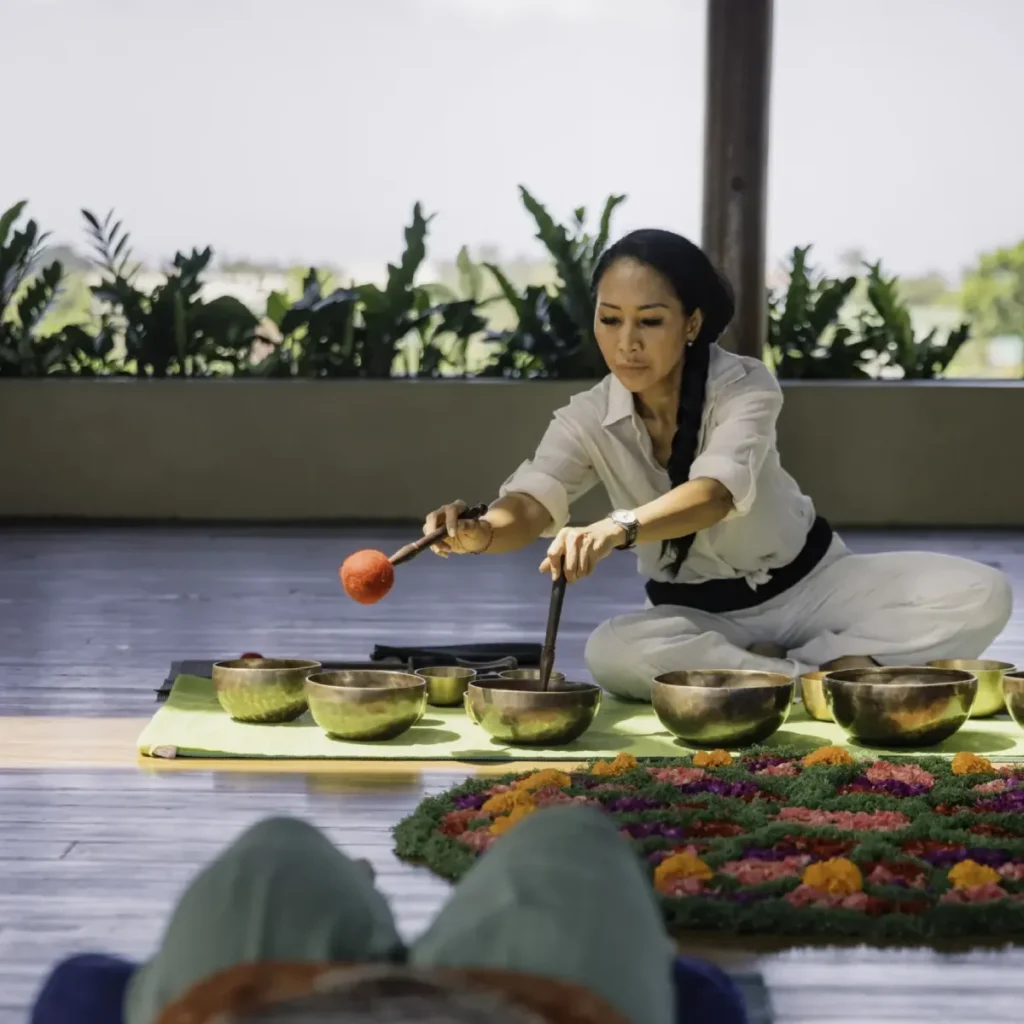

“Private” shows up on almost every retreat venue listing in Bali: a villa with a “private pool,” a boutique hotel with “exclusive” branding, a resort wing with “private access.” For a retreat leader, those are marketing words, not a guarantee that your group will have the property to yourselves. Before you book anything calling itself private, it’s worth knowing what that word should actually mean, and what to ask to confirm it’s true.
Quick answer: A genuinely private retreat venue means full exclusive use: your group, and only your group, on the property for the length of your stay, with no other bookings sharing the common areas, staff, or grounds. A “private villa” inside a bigger resort, or a boutique hotel that still takes other reservations around your dates, doesn’t meet that bar, even when the listing uses the word “private.” The only way to know for certain is to ask directly and get exclusivity confirmed in writing before you book.
What “Private” Actually Means for a Retreat Venue (and What Gets Marketed as Private Instead)
In Bali retreat marketing, “private” gets used for at least three different things, and only one of them is actually a private venue:
- Full-property buyout. Your group is the only booking on the property for your entire stay. Every room, every common space, every staff member is yours for those dates. This is what “private retreat venue” should mean.
- A private villa inside a shared compound. Your room or villa is private, but the pool, restaurant, spa, and grounds are shared with other guests who have nothing to do with your retreat.
- “Exclusive” as a brand word. Some resorts and boutique hotels use “exclusive” in their name or marketing copy while still accepting unrelated bookings around your dates. The word describes the positioning, not the arrangement.
The gap between these three is exactly where retreat leaders get caught out, usually after arriving to find other guests at breakfast.
Why Retreat Leaders Look for a Private Venue Specifically
A few reasons this matters more for a retreat than for an ordinary holiday booking:
- Program control. A shared yoga shala or dining room means working around other guests’ schedules, not just your own group’s.
- Confidentiality. Retreats that involve emotional or healing work, journaling, group sharing, bodywork, often benefit from guests not having to be self-conscious around strangers who aren’t part of the group.
- A single guest list. Easier to manage safety, dietary needs, and logistics when every person on the property is accounted for and part of your program.
- An uninterrupted group experience. The retreat is shaped by your group alone, not diluted by unrelated guests moving through the same spaces.
This isn’t a niche preference. Writing in National Geographic Traveller, luxury travel advisor Kathy Boate points to privacy and freedom “not to have your trip influenced or compromised by ‘randoms'” as the real driver behind the exclusive-access trend, the same logic that applies to choosing a venue for a retreat group, just at a different scale.
Have dates in mind? Start building your retreat with your dates, group size, and any activities you’d like to add, and we’ll follow up to confirm availability and your total cost.
What to Verify Before You Book a “Private” Venue
A few direct questions before you sign anything:
- Is full exclusive use confirmed in writing for your entire date range, not just verbally implied?
- Are staff dedicated to your group only during your stay, rather than rotating with other bookings?
- Are common spaces, dining area, pool, yoga or ceremony space, shared with any guests outside your group at any point?
- What happens on your arrival and departure days specifically, is the property still hosting the previous group, or fully cleared for yours?
A venue that can answer all four without hesitation is describing a real private venue. One that gets vague on any of them is probably describing a private villa inside a shared property.
Where Floating Leaf Fits
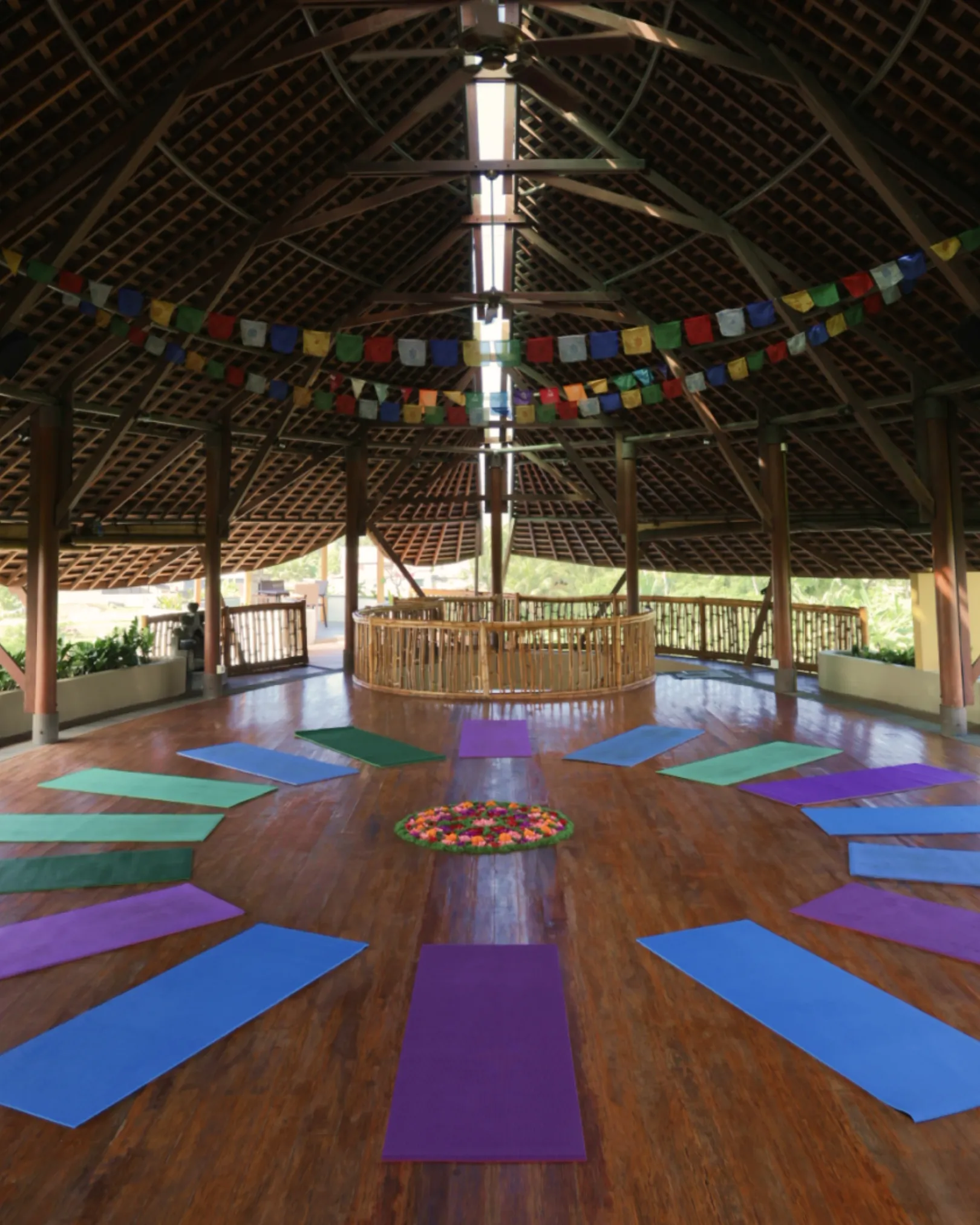
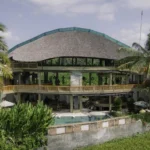
Floating Leaf is built around hosting one retreat group at a time, not multiple bookings sharing a single property, and that single-group model shapes real day-to-day decisions, not just the headline claim of being “private.” That’s the same positioning we lay out in more detail in Floating Leaf vs. a Bali Resort and what retreat leaders should check at an eco-retreat venue.
After hosting retreat leaders from so many different backgrounds over the years, one thing became clear to me: the groups that got the most out of their time together were always the ones who had the whole property to themselves. That’s exactly why I made the decision to run Floating Leaf as a fully private, exclusive-use venue.
In practice, that decision shows up in a few concrete ways:
- A dedicated property and team. Every retreat group’s program is different, so the venue and staff work around your group’s actual schedule and needs for that week, rather than running a standard rotation shared across several bookings.
- Dietary needs, not a set menu. Our kitchen plans around each guest’s actual dietary restrictions rather than offering one fixed menu with substitutions, the kind of thing Stella Tyron, who runs retreats through Stella Luna School, praised us for after bringing her own group here. See how that works in practice.
- Eco-luxury, not a resort strip. Floating Leaf is built as an eco-luxury property, grounded in sustainable, Balinese-inspired design, rather than a standard resort build.
- Quiet, but not cut off. The venue sits in a quieter village setting outside Bali’s busiest tourist areas, while staying close enough to Ubud’s center and Sanur that day trips to either are straightforward, not a trek.
For a first-hand account of what that looks like in practice, see one retreat leader’s own story of hosting her group here, or browse more in our guest feedback.
“One of the most wonderfully private locations.” — Josie F., Melbourne, AUS
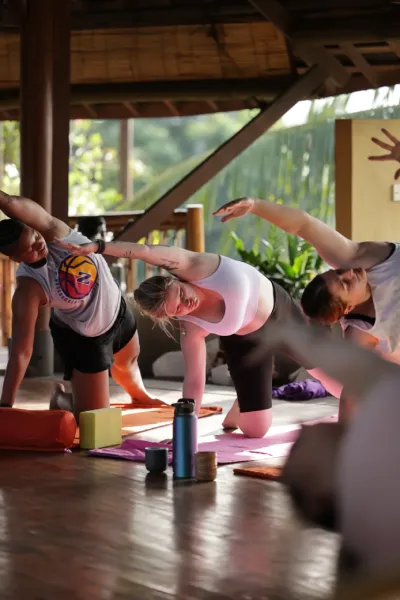
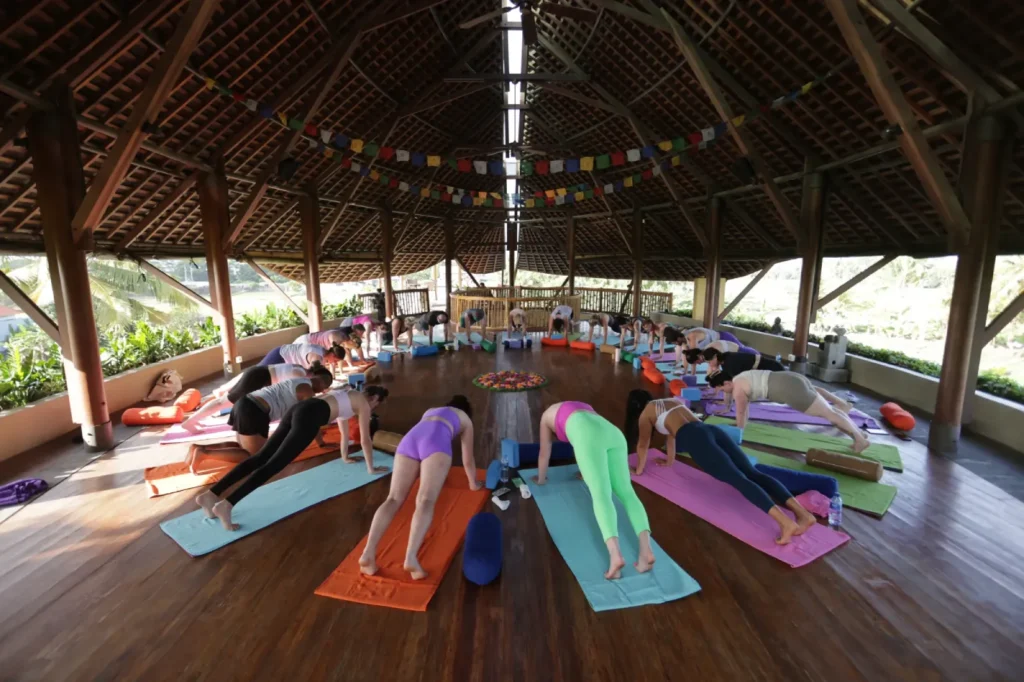
“Ours was a 12-person yoga retreat and the facility was absolutely perfect for this type of activity.” — Tamara, Perth, AUS
You can also look at our Host a Retreat page for how we structure the venue around a single leader’s retreat from start to finish.
Frequently Asked Questions
Is Floating Leaf a fully private, exclusive-use venue?
Yes. We host one retreat group at a time rather than running multiple bookings alongside each other, so the property, grounds, and staff are dedicated to your group for your stay.
What’s the difference between a “private villa” and a private retreat venue?
A private villa gives your group its own room or building inside a larger property that other, unrelated guests are also using. A private retreat venue means the entire property, common areas included, is reserved for your group alone.
How do I check pricing and availability for a private retreat venue in Bali?
If you already have dates in mind, the fastest way is to use our Retreat Builder: add your dates, group size, and any additional activities you’d like beyond what’s included, and our team will follow up with availability and your total cost.
Does a private, exclusive-use venue cost more than a shared resort?
Generally, yes, since you’re not splitting the property’s operating cost with other paying guests during your stay. In exchange, the entire team works only for your group for that stretch, the kitchen customizes meals around each guest’s actual dietary needs instead of running one set menu, and nothing on the property is rationed or shared between bookings. As one past guest put it in our guest feedback: “It was if we had our own private villa with a full staff. For the price, the experience cannot be beat.” The exact difference depends on group size and dates, so it’s worth using the Retreat Builder for a direct quote rather than assuming based on a shared-resort rate.
Have your dates in mind? Start designing your retreat, select any additional activities you’d like on top of what’s included, and we’ll follow up with availability and pricing.