
“Eco-luxury” shows up in the marketing copy of half the properties in Ubud and the hills above Bali’s south coast, and after a while it stops telling you anything concrete. For anyone comparing Floating Leaf to a standard five-star Bali resort, the real question isn’t whether the word “eco-luxury” is accurate, it’s what specifically changes because of it: the rooms, the food, the spa, the price, and what you’re deliberately not getting that a beachfront resort would otherwise offer.
Here’s the actual, operational comparison, not the brochure version.
- 1 What Does “Eco-Luxury” Actually Mean, Beyond the Marketing Word?
- 2 How Does the Room and Property Experience Actually Differ?
- 3 What’s Different About the Food?
- 4 How Does the Spa and Wellness Program Compare?
- 5 What Does Floating Leaf Give Up by Not Being a Standard Resort?
- 6 Who Is Floating Leaf Actually Right For, and Who Should Book a Standard Resort Instead?
- 7 Does Eco-Luxury Cost More or Less Than a Standard Bali Resort?
- 8 How Do You Verify an “Eco-Luxury” Claim Before You Book?
- 9 Frequently Asked Questions
What Does “Eco-Luxury” Actually Mean, Beyond the Marketing Word?
At Floating Leaf, it means three concrete things: the land has a real, documented history with the local village rather than being a resort development dropped onto cleared ground, the food and staffing are built around local sourcing and community employment rather than imported systems, and the comfort layer — rooms, spa, dining — is genuinely five-star rather than a rustic compromise dressed up as intentional minimalism.
A lot of properties lead with the aesthetic of eco (natural materials, muted colors, a garden) without the operational substance behind it. The aesthetic is easy to copy. The land history, sourcing relationships, and community ties are not.
How Does the Room and Property Experience Actually Differ?
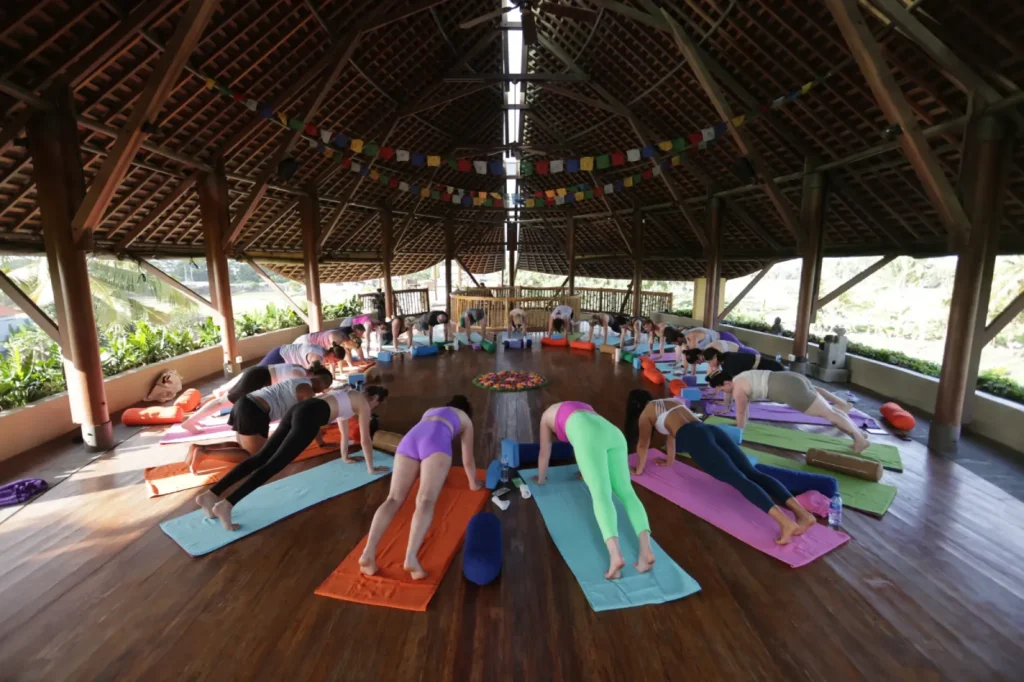
A typical full-service Bali resort optimizes for breadth: a large pool complex, multiple restaurants, a kids’ club, in-room entertainment, and often a beachfront or clifftop address built for high turnover and a wide range of guest types. Floating Leaf optimizes for depth over breadth in a smaller footprint: fewer rooms, more program space, yoga shalas, treatment rooms, and a layout built around retreat groups and wellness-focused stays rather than a general leisure crowd.
You won’t find an in-room TV or a swim-up bar here, on purpose — that’s not an oversight, it’s a deliberate trade against the kind of stay the property is actually built for.
What’s Different About the Food?
A standard resort’s dining program is usually built for variety and familiarity: a buffet with international options, a la carte Western and Asian menus, and ingredients sourced through standard hospitality supply chains that prioritize consistency over provenance. Floating Leaf’s dining program is locally sourced and largely plant-based, built to work for a retreat group’s specific dietary needs across a whole week rather than a rotating buffet for a transient guest list.
If you want menu variety and recognizable international dishes every night, a standard resort delivers that more reliably. If you want food that’s part of the property’s actual sustainability story rather than a side note, that’s the trade Floating Leaf is making instead.
How Does the Spa and Wellness Program Compare?
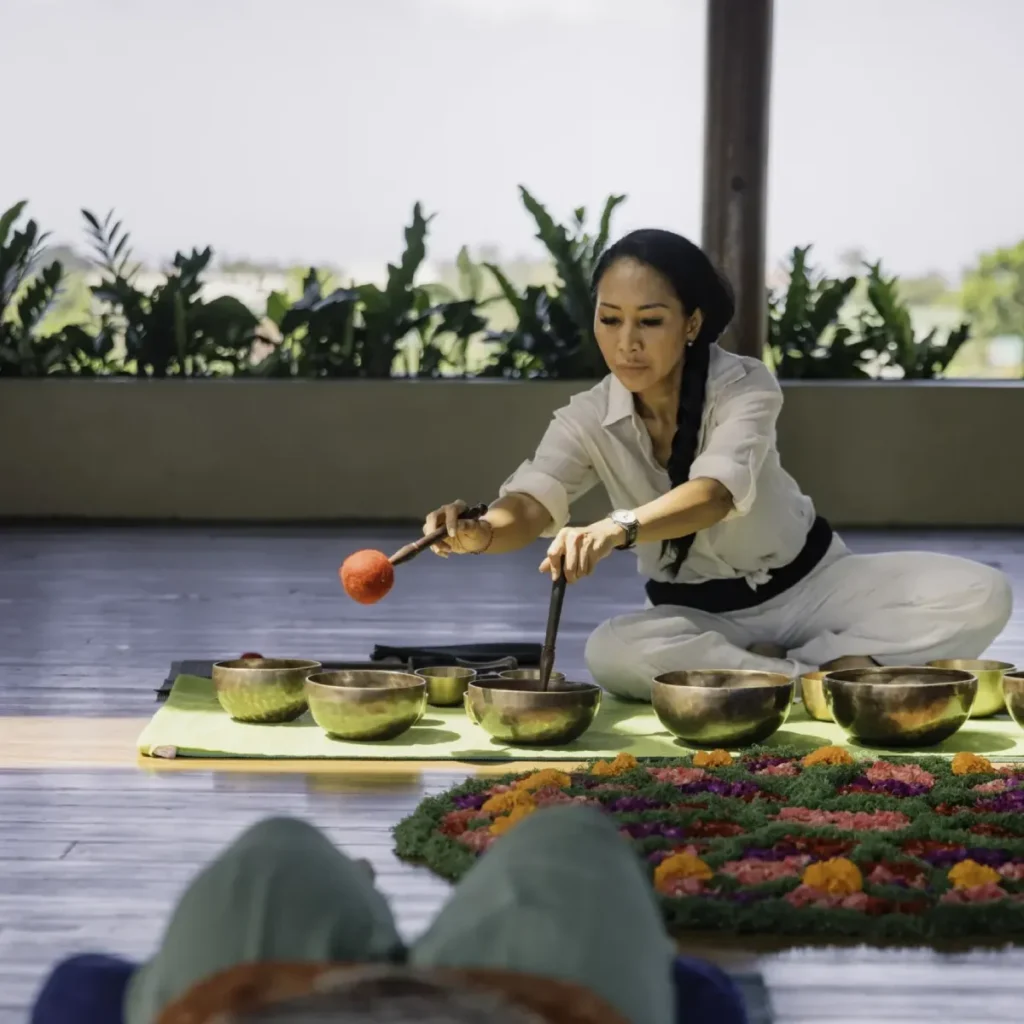
Most Bali resorts treat the spa as a revenue center bolted onto a leisure stay — a menu of treatments you book a la carte between pool time. At Floating Leaf, the Melati Spa and the broader wellness program — yoga, traditional Balinese healing practices, and the Tri Hita Karana philosophy — are built into the core offering rather than an upsell.
That’s a meaningful difference if wellness is the actual reason you’re traveling, and a less relevant one if you’re mainly looking for a beach vacation with a spa available on the side.
What Does Floating Leaf Give Up by Not Being a Standard Resort?
Honestly: nightlife, beachfront access, and the kind of broad entertainment program that keeps a wide range of guest types — families, couples, solo leisure travelers — all satisfied under one roof. Floating Leaf isn’t trying to be all of those things at once, and the Is Floating Leaf Right for You page says so directly rather than letting guests assume “five-star” means “resort as usual.”
That kind of upfront honesty tends to reduce mismatched bookings — a guest expecting beachfront nightlife is going to be disappointed here regardless of how good the yoga program is.
Who Is Floating Leaf Actually Right For, and Who Should Book a Standard Resort Instead?
It’s the right fit for retreat leaders running a program that needs real depth — yoga teachers, corporate groups doing strategic work, personal-growth retreats — and for individual travelers whose primary goal is a wellness-focused stay rather than a beach holiday. It’s probably the wrong fit for a family wanting a kids’ club and a swim-up bar, a couple wanting beachfront nightlife, or a traveler who wants maximum flexibility to eat and do whatever they want without a program structure around the week.
Neither of these is a worse choice, they’re different trips built for different goals, and being clear about which one you’re actually booking saves everyone a disappointing week.
Does Eco-Luxury Cost More or Less Than a Standard Bali Resort?
It depends on what you’re comparing it to. A budget guesthouse will always be cheaper, but against a comparable five-star beachfront resort, Floating Leaf’s pricing is generally in the same range — sometimes lower per night once you account for what’s bundled in: meals, program space, and spa access that a standard resort would charge for separately.
The honest framing is that eco-luxury here isn’t a premium on top of standard luxury, it’s a different allocation of the same budget — less spent on broad entertainment infrastructure, more spent on program depth, sourcing, and wellness programming. That allocation tracks a broader shift the Global Wellness Institute has documented in its own wellness tourism research: travelers increasingly paying for program depth and sourcing integrity rather than square footage and entertainment infrastructure.
How Do You Verify an “Eco-Luxury” Claim Before You Book?
Ask what specifically backs the claim: where does the land’s story come from, how is staffing structured, where does the food come from, and is any of it independently verifiable rather than only stated on the property’s own marketing pages.
Floating Leaf’s Sustainability and Community pages lay out specifics rather than a mission statement alone, and the same question is worth asking of any property using the term, including this one.
Not sure if Floating Leaf’s version of eco-luxury fits what you’re actually looking for? Schedule a Free Consultation or walk through the Virtual Tour to see the property directly.
Frequently Asked Questions
Is Floating Leaf more expensive than a standard Bali resort?
Generally comparable to a five-star beachfront property once meals, program space, and spa access are factored in, rather than a premium on top of standard luxury pricing.
Does Floating Leaf have a pool and standard resort amenities?
Yes, alongside the wellness-specific facilities, but the property is built around program depth and retreat space rather than the broad entertainment infrastructure of a large beachfront resort.
Is Floating Leaf a good fit for a family vacation?
Not typically. It’s built for retreat groups and wellness-focused individual stays rather than the kids’ club and broad entertainment programming a family resort usually offers. See “Who Is Floating Leaf Actually Right For” above.
What makes Floating Leaf’s eco-luxury claim different from other properties using the same term?
Verifiable specifics rather than aesthetic alone: documented land history, local sourcing, and community employment detailed on the Sustainability and Community pages, rather than natural materials and a garden standing in for the substance.
Can I book Floating Leaf for a standard vacation, not a retreat?
Yes, individual wellness-focused stays are available outside of group retreat bookings, though the property’s program and pacing are still built around wellness rather than a typical leisure itinerary.
How do I know if Floating Leaf is the right fit before I book?
The Is Floating Leaf Right for You page addresses this directly, and a consultation is the fastest way to talk through your specific trip goals before committing.
See the difference for yourself. Walk through the property on the Virtual Tour, then schedule a free consultation to talk through whether this is the right fit.