
You don’t need thousands of followers to fill a retreat. You need the right people, the right offer, and a clear reason for them to say yes.
One of the first questions many retreat leaders ask when considering hosting a retreat is:
“How big does my audience need to be to fill it?”
It’s an understandable question. You might look at another retreat leader with 50,000 Instagram followers and think, “I only have 3,000. There is no way I can fill a retreat.” But follower count alone tells you very little about your ability to fill a retreat. The difference is usually not audience size.
It is audience relevance, trust, engagement, offer positioning, timing, and the strength of the transformation you’re offering.
So instead of asking:
“How many followers do I need?”
A better question is:
“How many people in my community are genuinely likely to need, want, and be able to invest in this experience?”
That is the question that can help you build a retreat based on your actual expertise, rather than simply following what appears popular online.
Building an audience is only half the work. Our free Retreat Planning Guide includes a month-by-month marketing plan to turn followers into participants.
- 1 1. Your Audience Is Bigger Than Your Instagram Following
- 2 2. Start With the Retreat You Actually Want to Create
- 3 3. The Strongest Retreats Solve a Specific Need
- 4 4. You Don’t Need Everyone. You Need Enough of the Right People.
- 5 5. Engagement Can Matter More Than Audience Size
- 6 6. Your Previous Clients May Be Your Most Valuable Audience
- 7 7. Your Expertise Should Lead — But Your Audience Should Help Shape the Offer
- 8 8. A Small Audience Can Actually Be an Advantage
- 9 9. Before Booking Your Retreat, Test the Demand
- 10 10. A Simple Retreat Readiness Test
- 11 Your Retreat Doesn’t Need a Bigger Audience. It Needs a Better-Matched Audience.
1. Your Audience Is Bigger Than Your Instagram Following
When planning a retreat, don’t measure your audience only by social-media followers.
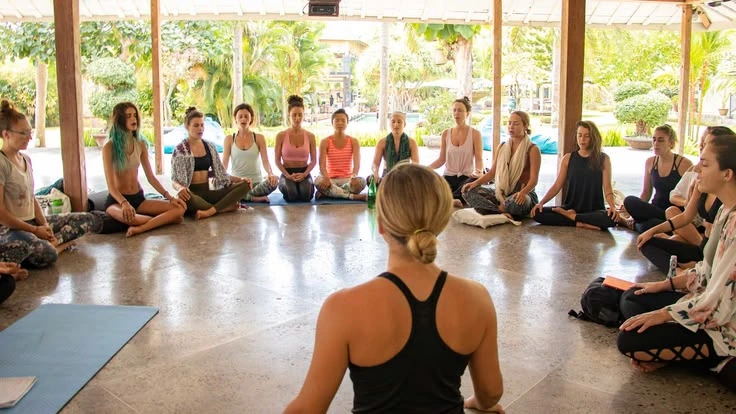
Your potential retreat audience may include:
- Your email list
- Existing and former clients
- Students
- Private coaching clients
- Yoga or fitness class participants
- Members of your online community
- Podcast listeners
- Workshop participants
- Professional networks
- People who have attended your previous events
- Friends and personal referrals
- Collaborators’ communities
- People who regularly engage with your content
- People who have previously expressed interest in working with you
For example, imagine you have 3,000 Instagram followers. That number sounds relatively small.
But perhaps you also have:
- 800 email subscribers
- 300 former clients
- 200 people in your private community
- 100 previous workshop participants
- 50 people who regularly attend your classes
Suddenly, your relationship with your potential retreat audience looks very different.

The important question isn’t:
“How many people follow me?”
It is:
“How many people know me, trust me, and have a reason to want the transformation I offer?”
2. Start With the Retreat You Actually Want to Create

Your expertise should be the foundation of the retreat.
Before calculating how many people you need, define the retreat.
Ask yourself: Who am I best qualified to help? How can I reflect my expertise to help people?

Perhaps you are a:
- Yoga teacher
- Meditation teacher
- Breathwork practitioner
- Somatic practitioner
- Women’s wellness practitioner
- Coach
- Therapist
- Nutrition professional
- Leadership facilitator
- Creative teacher
- Spiritual practitioner
What problem or desire can I help people address?
Instead of creating:
“A Transformational Yoga Retreat for Women Ready to Reconnect With Themselves,”
try:
“A Creative Renewal Retreat for Women Ready to Reignite Their Creativity.”
The second approach is much easier for a potential participant to understand. They can recognize themselves in the problem.
3. The Strongest Retreats Solve a Specific Need

Wellness travel is evolving. Today’s wellness traveler is not necessarily looking for a generic “wellness holiday.” Consumers are increasingly interested in specific outcomes and experiences.

The Global Wellness Institute’s 2026 Wellness Tourism Trends highlights areas such as deep rest, nervous-system reset, privacy, longevity, and destination-scale wellness.
This doesn’t mean every retreat should suddenly become a “nervous system retreat.”
It means retreat leaders should pay attention to what people are currently struggling with and seeking.
For example, people may be looking for:
- Deep rest
- Stress reduction
- Reconnection
- Better sleep
- Community
- Personal transformation
- Women’s health
- Longevity
- Emotional wellbeing
- Creativity
- Spiritual connection
- Healthy lifestyle change
- Nature and disconnection from technology
But trends should inform your retreat — not dictate it. Your expertise comes first. The opportunity is to find the intersection between:
- What are you good at?
- What does your audience genuinely need?
- What people are currently willing to invest in?
That intersection is where a strong retreat concept can emerge.
4. You Don’t Need Everyone. You Need Enough of the Right People.

Let’s say your retreat venue requires a minimum of 12 participants. You don’t necessarily need an audience of 12,000 people. You need enough qualified potential participants to create 12 bookings.
For planning purposes, you can think about your audience in stages:
Total audience → Relevant audience → Interested audience → Qualified prospects → Bookings
For example, imagine you have a community of 2,000 people. If your retreat is highly relevant to 30% of them, you have approximately:
600 potentially relevant people.
If a smaller percentage become genuinely interested:
100–150 people may engage with the retreat.
From there, perhaps:
20–30 people seriously consider attending.
And ultimately:
12–15 people book.
These numbers are not a universal industry conversion benchmark. They are simply a way to think about the funnel.
The important lesson is that your entire audience does not need to buy. You need a sufficiently large pool of people who are:
- Relevant to the retreat
- Interested in the outcome
- Able to afford it
- Available on the dates
- Motivated enough to make the trip
- Willing to trust you with the experience
5. Engagement Can Matter More Than Audience Size
Imagine two retreat leaders.
| Retreat Leader A | Retreat Leader B | |
|---|---|---|
| Followers | 20,000 | 2,500 |
| Engagement | Very low | High |
| Communication with followers | Little direct communication | Regular conversations with their community |
| Email list | None | 500-person list |
| Previous retreat participants | None | 100 previous clients |
| Niche | No clear niche | Strong reputation in a specific area; people regularly ask them for deeper support |
Who is more likely to fill a 15-person retreat? It could easily be Retreat Leader B.
This is why we recommend looking beyond vanity metrics.
Engagement — Do people comment, reply, ask questions, attend your events, or respond to your emails?
Trust — Have people already invested in your teaching, coaching, courses, workshops, or services?
Intent — Have people ever asked you, “Do you offer retreats?” That question can be a very important signal.
Community — Do people identify themselves as part of your community?
Purchasing behavior — Have people previously purchased something at a similar price point?
These indicators can tell you much more than follower count.
6. Your Previous Clients May Be Your Most Valuable Audience
If you have already helped people successfully, don’t underestimate that community. Your previous clients already know:
- Who you are
- How you teach
- What you believe
- What your approach feels like
- What results you can help create
That existing trust can dramatically reduce the amount of education required to sell a retreat. Your retreat may simply become the next step in their journey with you.
For example:
- A yoga teacher might have: Online classes → Workshops → Private sessions → Retreat
- A coach might have: 1:1 coaching → Group program → Retreat
- A wellness practitioner might have: Consultation → Treatment/program → Retreat
A retreat isn’t necessarily a completely new product. It can be a deeper experience built around the transformation you already provide.
7. Your Expertise Should Lead — But Your Audience Should Help Shape the Offer
This is an important distinction.
You shouldn’t simply ask, “What is trending?” and create a retreat around it. You also shouldn’t say, “This is what I teach, so everyone should want it.” Instead, look for the overlap.
Your Expertise
What can you genuinely teach, guide, or facilitate with confidence? Your retreat should be built around the knowledge and transformation you are best qualified to offer.
Your Audience’s Needs
What are your people struggling with, wanting to change, or hoping to experience? Start with their real needs rather than simply creating what you think they might want.
Market Demand
What are people increasingly looking for in wellness and travel? Look at emerging interests and trends to make sure your retreat feels relevant and timely.
Your Unique Perspective
What makes your approach different? Your personal experience, teaching style, methodology, or philosophy can make your retreat stand out from similar offerings.
Your expertise + your audience’s needs + market relevance = a compelling retreat concept
8. A Small Audience Can Actually Be an Advantage

A smaller community can allow you to create something much more personal.
For example, a retreat leader with 1,500 highly engaged followers may know their audience extremely well. They might know:
- What their community struggles with
- What questions they ask
- What language they use
- What transformations they want
- What price range feels realistic
- What type of retreat environment appeals to them
That knowledge can be more valuable than having 50,000 passive followers.
And smaller retreats can offer something today’s wellness travelers increasingly value: connection, intimacy, personalization, and depth.
In other words, you don’t necessarily need to compete with large-scale wellness experiences. Your advantage may be creating an experience where participants feel genuinely seen.
9. Before Booking Your Retreat, Test the Demand
If you are considering your first retreat, don’t rely entirely on hope. Test your idea. Start with a simple expression-of-interest campaign. For example:
“I’m considering hosting a 6-day Bali retreat focused on [specific transformation] this December. I’m exploring dates and would love to know if this is something my community would be interested in.”
Then ask people to register their interest. You can use:
- A simple form
- Your private community
- Personal conversations
- A webinar or information session
The goal isn’t to sell the entire retreat immediately. The goal is to discover: Is there real demand?
10. A Simple Retreat Readiness Test
Before committing to your retreat dates, ask yourself these seven questions:
- Do I have a clearly defined audience? Can I describe exactly who this retreat is for?
- Do I understand their problem or desire? Can I explain why they would want to attend now?
- Does the retreat reflect my expertise? Am I offering something I am genuinely qualified and passionate to facilitate?
- Is there evidence of interest? Have people responded positively to the concept?
- Do I have enough qualified prospects? Not just followers — people who could realistically attend.
- Does the price make sense for my audience? Can my ideal participant realistically afford the experience?
- Do I have enough time to market it? A retreat is not simply an event. It is a sales process. Giving yourself enough lead time allows your audience to discover the retreat, consider it, plan financially, arrange travel, and make the decision.
Your Retreat Doesn’t Need a Bigger Audience. It Needs a Better-Matched Audience.
The most successful retreat leaders don’t simply chase more followers. They build trust with the right people. They listen to their community. They understand what their audience needs. They use their expertise to create meaningful transformation. And they pay attention to how wellness travelers’ expectations are changing.
The wellness market continues to grow, but that doesn’t mean every retreat concept will automatically succeed. The opportunity is becoming more specialized: wellness travelers are increasingly seeking experiences that feel relevant, credible, and meaningful — rather than simply “wellness” as a broad category.
So before asking:
“Do I have enough followers to fill a retreat?”
ask:
“Do I understand the people I am trying to serve well enough to create a retreat they genuinely want?”
That is a much more powerful question. And it is where a successful retreat begins.
Ready to fill your spots? Download the free Retreat Planning Guide for the full marketing timeline, from first announcement to your last open spot.
Frequently Asked Questions
How many followers do I need to fill a retreat?
There is no fixed follower number. What fills a retreat is how many people in your community are relevant to the retreat, trust you, and can afford and attend it. A leader with 2,500 engaged followers and an email list can fill a retreat faster than one with 20,000 passive followers.
Can I fill a retreat with a small audience?
Yes. A small, engaged community often fills a retreat more easily, because you already know what its members struggle with, what language they use, and what price feels realistic. Smaller groups also offer what many wellness travelers now want: intimacy, personal attention, and depth.
What counts as my retreat audience besides social media?
Your real audience includes your email list, past and current clients, students, workshop and class participants, private community members, podcast listeners, and referrals. Add these together before you judge whether your audience is big enough.
How many bookings can I expect from my community?
Only a small share of your community will book, and that is normal. As a planning illustration, a 2,000-person community where 30% find the retreat relevant gives about 600 people, of whom 100 to 150 may engage, 20 to 30 may seriously consider it, and 12 to 15 may book. These figures are a way to think about the funnel, not an industry benchmark.
What matters more than follower count when filling a retreat?
Engagement, trust, and intent matter more. Look for people who reply and attend your events, who have already paid for your teaching at a similar price point, and who have asked you directly whether you offer retreats.
How do I test demand before booking a retreat venue?
Run a simple expression-of-interest campaign before you commit to dates. Share the retreat idea, its focus, and a rough timeframe with your email list, social channels, or a short webinar, and ask people to register interest through a form.
How do I know I am ready to commit to retreat dates?
You are ready when you can describe exactly who the retreat is for, why they would attend now, and you have evidence of real interest from qualified prospects. You also need a price your audience can afford and enough lead time to market the retreat.
How many participants can Floating Leaf host?
Floating Leaf has 12 rooms and hosts up to 28 guests, with single, double, and some triple-occupancy rooms. The venue can be booked exclusively for your group. See Host a Retreat for the full venue FAQ.