
The hardest part of planning a corporate retreat usually isn’t the venue, it’s the agenda. Pack in too much structured work and it reads as the office with better scenery, which defeats the point and exhausts a team that was supposed to leave recharged. Pack in too little and leadership asks, reasonably, what the trip actually accomplished beyond a nice set of photos.
The agenda below is a real sample structure for a five-day, four-night corporate retreat, built around the kind of balance that actually produces both outcomes: visible strategic progress and a team that comes home rested rather than more drained than when they left.
- 1 What Should Day One Actually Prioritize?
- 2 What Does a Balanced Work Day Actually Look Like?
- 3 Where Should the Heaviest Strategic Work Sit in the Week?
- 4 How Should Rest and Recovery Be Built Into the Schedule, Not Just Left to Chance?
- 5 What Role Do Shared Meals and Informal Time Play in the Itinerary?
- 6 What Should the Final Day and Departure Actually Include?
- 7 What Are the Most Common Mistakes Teams Make When Building This Itinerary?
- 8 What Does a Sample 5-Day Agenda Actually Look Like Day by Day?
- 9 Frequently Asked Questions
What Should Day One Actually Prioritize?
Arrival day should never include a full work session, no matter how tight the schedule feels. Airport transfers, settling in, and a welcome dinner are the entire agenda, with maybe a short, optional orientation walk around the property. People arrive travel-worn, jet-lagged, and still half in their inbox, and starting serious strategic work before the group has physically and mentally arrived tends to produce a flat, distracted first session that has to be partially redone later anyway.
What Does a Balanced Work Day Actually Look Like?
The strongest structure splits the day in two: a focused morning block for the heaviest strategic work, when the group’s energy and attention are highest, and a lighter afternoon built around wellness, skills workshops, or collaborative, rather than decision-heavy, work.
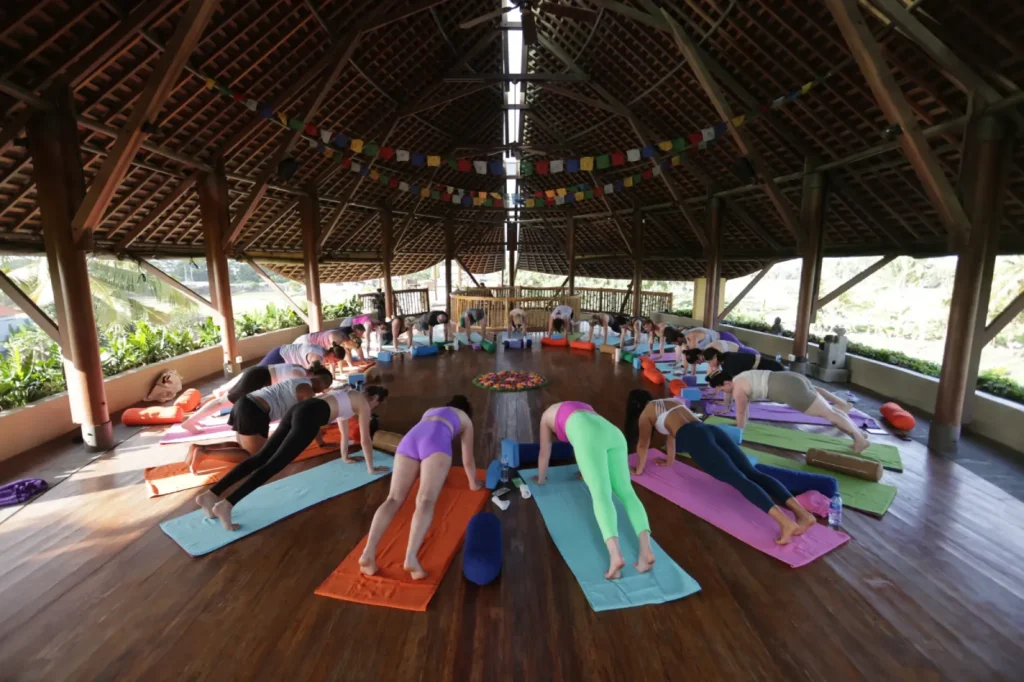
A typical day might open with a yoga or meditation session, move into a morning leadership workshop or strategy block, break for a shared farm-to-table lunch, and spend the afternoon on something more active or creative — a Balinese cooking class, an offering-making workshop, or a lighter cross-functional planning session — before an evening left mostly open for the group to actually unwind together.
Where Should the Heaviest Strategic Work Sit in the Week?
The middle of the retreat, typically day two or three of a five-day format, not the first day and not the last. By the second day, the group has had a night’s rest and isn’t still in transit mode, but there’s still enough runway left in the week to act on whatever gets decided — follow-up sessions, small-group work, adjustments — without everyone rushing out the door immediately after a hard conversation.
Scheduling the heaviest work for day one or day five is one of the most common agenda mistakes, and it usually means the real strategic output gets rushed or lost entirely.
How Should Rest and Recovery Be Built Into the Schedule, Not Just Left to Chance?
Deliberately, and on the calendar, not as whatever’s left over once the “real” sessions are done. A recovery-focused afternoon or evening, built around a Himalayan sound bath, spa time, or simply unstructured free time by the pool, works best placed right after the heaviest work block, so the group has a scheduled, sanctioned way to decompress rather than quietly checking email because nothing else was planned.
Retreats that treat rest as a nice-to-have rather than a scheduled part of the agenda tend to see the group mentally check out by day three regardless of what’s on the agenda. Gallup’s own research on employee engagement backs this up: disengagement climbs fastest when recovery time is treated as optional rather than built into how the week is actually structured.
More than most planners budget for. Three organic, farm-to-table meals a day, eaten together rather than in shifts, double as some of the most productive informal alignment time in the entire retreat — side conversations over lunch often resolve things a formal session couldn’t.
Building in real, unhurried meal time, rather than treating meals as a logistics box to check between sessions, is one of the lowest-effort, highest-return choices in the whole agenda.
What Should the Final Day and Departure Actually Include?
Like arrival day, departure day should stay light. A closing session — short, focused on concrete next steps and ownership rather than revisiting the whole week’s content — works better than a long wrap-up that tries to cover everything. Traditional music or dance performances, a closing circle, or a final shared breakfast give the retreat a clear emotional close before the group scatters to departure transfers, rather than ending on a logistics scramble.
What Are the Most Common Mistakes Teams Make When Building This Itinerary?
Overpacking the schedule is the most common one — treating the retreat as a chance to cram in every strategic topic that’s been deferred all year, which leaves no room for the rest that was half the point of leaving the office in the first place.
A close second is under-scoping the facilitation, assuming the heaviest strategic conversations will just happen organically if the right people are in the room, without a dedicated facilitator or a clear session structure to keep the conversation on track.
A third is ignoring travel fatigue entirely, scheduling a demanding work session for the afternoon people land, which usually has to be partially repeated once everyone’s actually alert enough to engage with it properly.
What Does a Sample 5-Day Agenda Actually Look Like Day by Day?
- Day one: airport transfers, arrival, settling in, welcome dinner.
- Day two: morning yoga, leadership workshop or strategy session, shared lunch, afternoon community project or lighter cross-functional session, free evening.
- Day three: morning meditation, the retreat’s heaviest strategic work block, shared lunch, afternoon Himalayan sound bath or spa recovery time, open evening.
- Day four: morning yoga, a skills workshop or Balinese cooking and offering-making class, shared lunch, afternoon free time or optional excursion, evening traditional music and dance performance.
- Day five: light closing session focused on next steps and ownership, final shared breakfast, departure transfers.
This structure is a starting template, not a fixed script — the actual balance of strategy sessions versus wellness and cultural programming should flex based on what your retreat is actually trying to accomplish and how exhausted the group is walking in.
Want this itinerary built around your team’s actual goals? Start Designing Your Retreat or schedule a free consultation to map a five-day agenda to what your team specifically needs.
Frequently Asked Questions
How many people can this itinerary accommodate?
Floating Leaf’s Corporate Retreat package accommodates up to 28 participants for a four-night, five-day exclusive-use stay.
Are meals included, and can they handle dietary restrictions across a large group?
Yes, three organic, farm-to-table meals a day are included, and the dining team can accommodate dietary restrictions across a full group rather than as individual special requests.
Does the itinerary include airport transfers?
Yes, airport transfers are included as part of the standard Corporate Retreat package.
Can we adjust the balance of work sessions versus wellness programming?
Yes, this sample agenda is a starting structure. The actual mix of leadership workshops, strategy sessions, and wellness or cultural programming is built around your specific goals during the planning process.
Is there a recommended minimum length for a corporate retreat itinerary?
Four nights and five days is the standard format and gives enough runway to place the heaviest strategic work mid-week with real rest on either side. Shorter formats tend to force rest and strategic work to compete for the same limited time.
How far in advance should we start planning the itinerary?
Earlier than most teams expect, particularly if the retreat involves leadership workshops that need outside facilitation or specific strategic outcomes. Speak with the team early in your planning process so the agenda can be built around your goals rather than retrofitted at the last minute.
See the venue this agenda runs in. Walk through the property on the Virtual Tour, then schedule a free consultation to start building your itinerary.