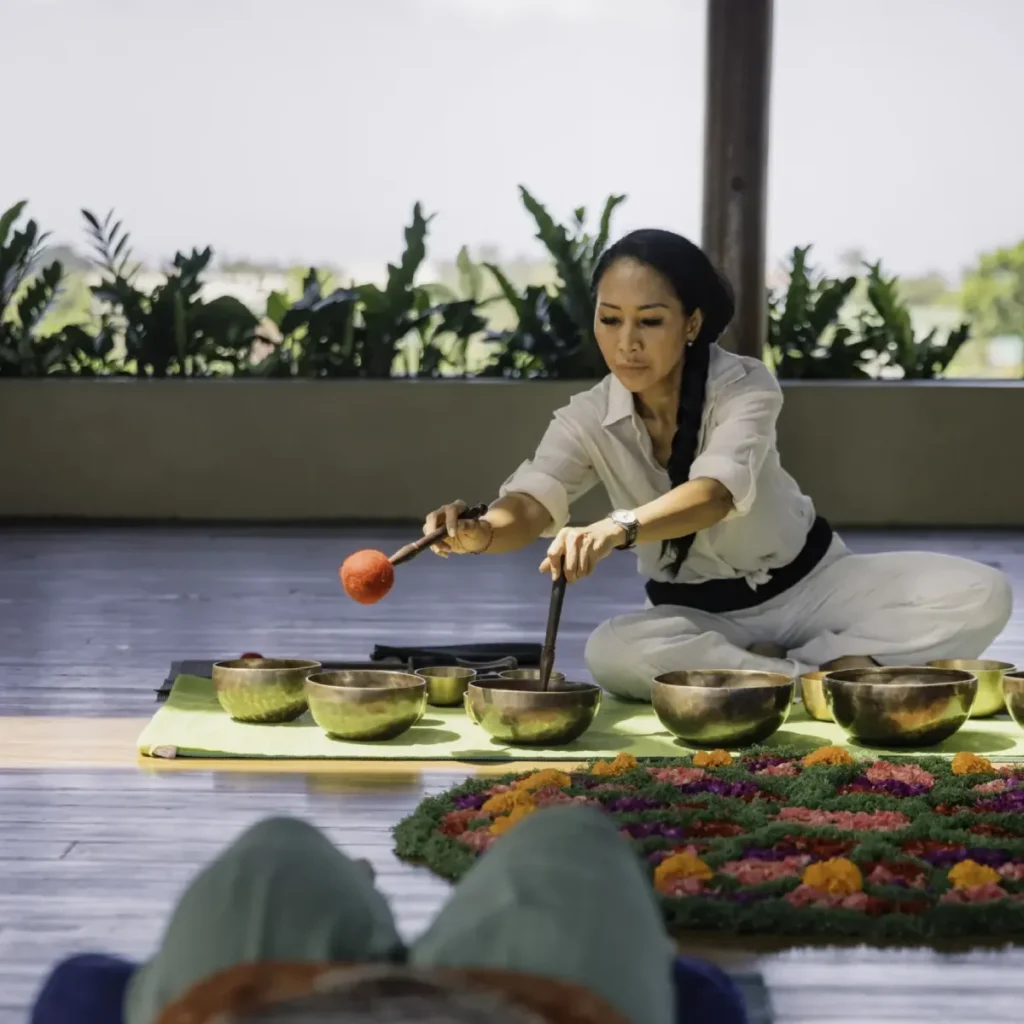

Most retreat leaders don’t start by searching for a venue. They start by trying to figure out which part of Bali actually fits their group, long before any specific property enters the picture. That makes sense: Bali isn’t one destination, it’s several distinct ones stitched together, and the difference between basing your program in Ubud versus Canggu versus the cliffs of Uluwatu changes almost everything about how the week actually feels. Here’s how we think about that choice, including where we fit into it ourselves.
Quick answer: Ubud suits deep, culture-forward programs but its center has gotten genuinely congested; Canggu and Seminyak suit social, modern-wellness groups near the beach but carry more outside noise; Uluwatu suits ocean-and-surf-leaning retreats on dramatic cliffs; Tabanan and Buleleng suit groups wanting total seclusion but add real travel time to everything; and villages like Sukawati offer that same cultural depth with less name recognition and fewer crowds, at the cost of needing a venue that supplies more of its own infrastructure. We sit in one of those quieter villages, Sukawati itself, built for leaders who want Ubud’s cultural depth with a venue run entirely around their own group.
What Are Bali’s Main Retreat Regions, and What Is Each Actually Good For?
| Region | Best For | Main Trade-Off |
|---|---|---|
| Ubud | Deep, culture-forward programs | Center traffic and crowds |
| Canggu & Seminyak | Social, modern-wellness groups near the beach | More outside noise and distraction |
| Uluwatu & the South | Ocean-and-surf-leaning retreats | Further from Bali’s cultural core |
| Tabanan & Buleleng | Total seclusion | Long transfers for everything |
| Sukawati & nearby villages | Ubud’s cultural depth without the crowds | Less built-up tourist infrastructure |
- Ubud, the spiritual and jungle heartland. Rice terraces, temples, and Bali’s densest concentration of yoga studios and healers. The trade-off: Ubud’s center has gotten noticeably busier in recent years, a program based right in the middle of it spends real time in traffic and shares the quiet with a lot of foot traffic.
- Canggu and Seminyak, modern and coastal. Closer to the beach, more cafes, more surf culture, a younger and more social energy. A good fit for a group that wants wellness alongside some social scene, a harder fit for a program built around silence and introspection.
- Uluwatu and the south, cliffside and surf. Dramatic ocean views and a strong surf-and-yoga identity, mostly boutique rather than resort-scale. Further from Bali’s cultural core, so it suits groups whose focus leans more physical and outdoor than culturally immersive.
- Tabanan and Buleleng, remote and traditional. The quietest option, real farming villages, minimal tourist infrastructure. The cost is logistics, airport transfers, day trips, and anything time-sensitive all take longer.
- Sukawati and Bali’s quieter in-between villages, authentic without the name recognition. Villages like Sukawati sit close enough to Ubud to share its cultural depth, rice terraces, temples, centuries-old craft and art markets, without carrying Ubud’s name recognition, crowds, or price inflation. The trade-off runs the other way: less built-up tourist infrastructure than the well-known hubs, so a venue here needs to supply more of that structure itself rather than leaning on what’s already around it.
What Should You Actually Weigh When Choosing an Area?
- How much outside world you want in the program. A livelier area helps some groups unwind between sessions. It pulls focus for others.
- Group size and transport logistics. The more remote the area, the longer every transfer takes, for arrival, for excursions, for anyone who needs to leave early.
- Distance from the airport. This matters more for a short program, where a long transfer eats into a 4- or 5-day retreat, than for a multi-week one.
- Whether you actually want a hotel, or a venue built around your group. Plenty of Bali’s wellness-forward areas are full of hotels with a yoga class attached. Fewer are built from the ground up for an outside leader to run their own full program.
Where Floating Leaf Fits: Built for the Leader, Not the Address
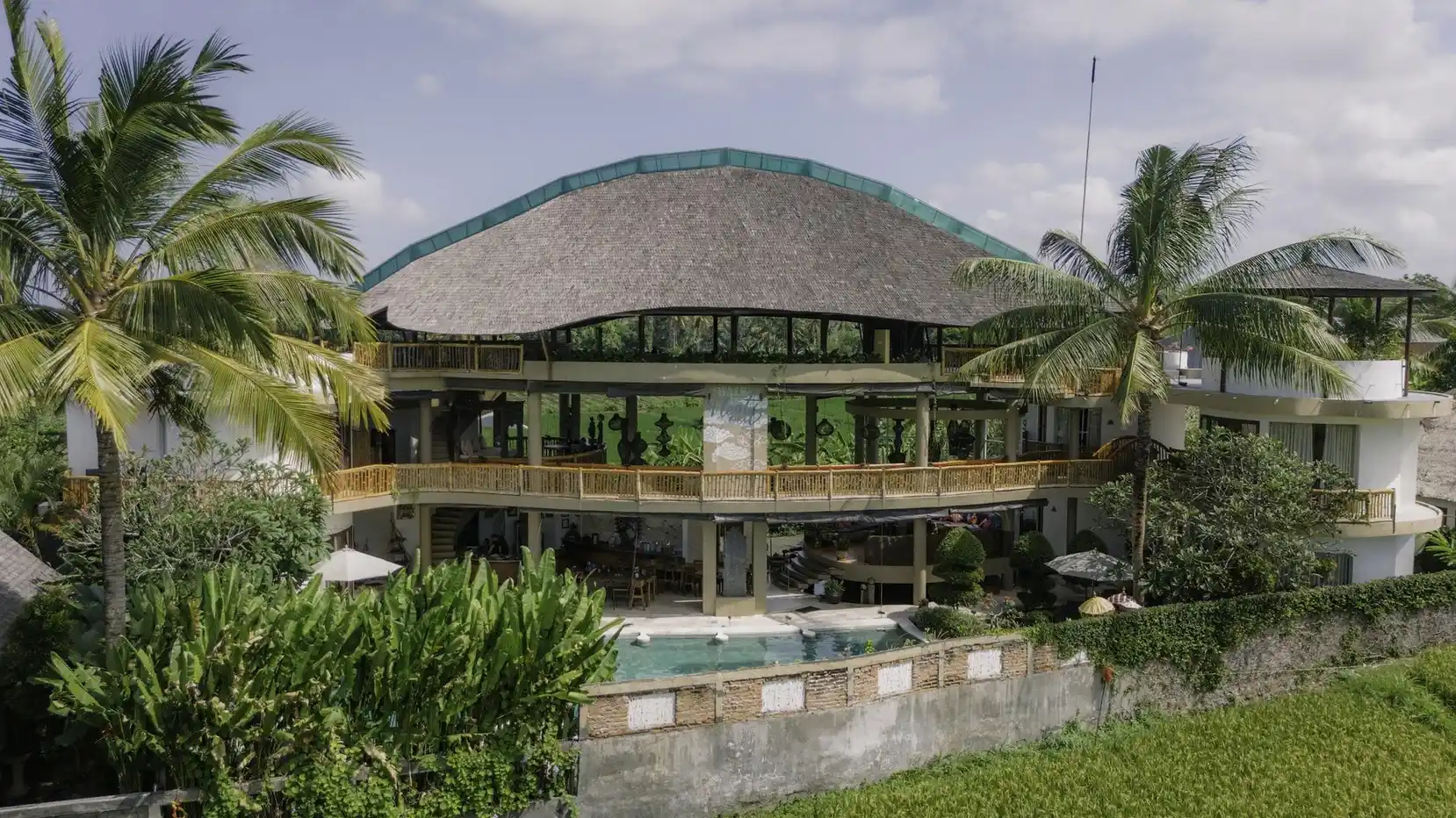
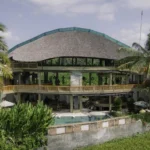
We’re in Sukawati, in Gianyar regency, close enough to Ubud that our rice terraces and our own Tri Hita Karana philosophy sit inside the same cultural landscape, the same one behind Bali’s UNESCO-recognized subak irrigation system, without being inside Ubud’s center traffic. Sukawati itself is exactly this kind of lower-key, authentic village, home to one of Bali’s oldest traditional art and craft markets, not a satellite suburb riding on Ubud’s name, and Gianyar regency runs all the way to the coast, so a beach day is easy to add into a program here too, something the purely inland parts of Ubud can’t offer.
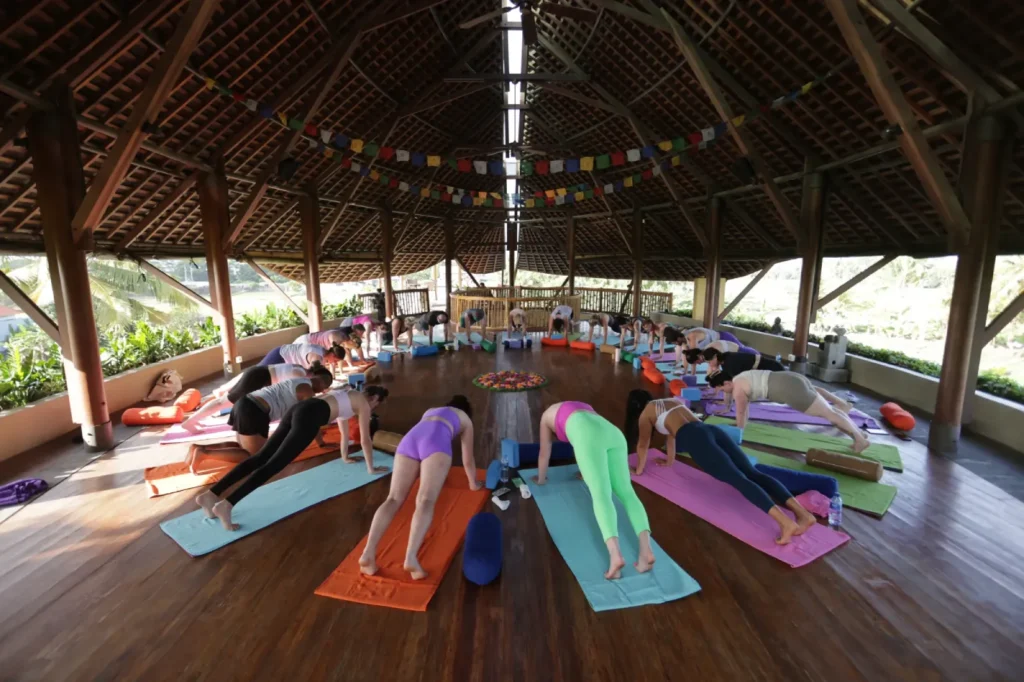
That’s a deliberate trade-off: the cultural depth retreat leaders look for in Ubud, with the quiet and control of a more remote property. We’re not trying to win by being more remote than Tabanan or livelier than Canggu. We’re built around a different axis entirely, an exclusive-use venue with concierge and shala support, designed for a retreat leader to run their own program start to finish, not a hotel that happens to also offer yoga. That same philosophy is why our kitchen rebuilds its menu around a group’s actual dietary needs instead of handing out a fixed one, and why Bodhi’s Farm raises our own organic chickens rather than stopping at a vegetable garden. The location decision and the infrastructure decision are the same decision, made the same way.
The Real Trade-Off: Immersion vs. Convenience
No area gets everything right, and the honest answer depends on the group in front of you, not on which region markets itself the loudest. A program chasing total seclusion will always trade something at the airport and on every excursion day. A program based in a busier, more social area will always trade some of the quiet that makes a retreat feel different from a vacation. Our own choice sits deliberately in between: close enough to Ubud’s depth to draw on it, far enough outside its center to actually keep the quiet, and built specifically so a leader isn’t managing logistics on top of everything else.
Not sure which area actually fits your group? Schedule a Free Consultation or Start Designing Your Retreat and we’ll walk through the trade-offs together.
Frequently Asked Questions
Is Ubud too crowded to host a retreat there now?
Ubud’s center, yes, has gotten noticeably busier, more traffic, more day-trippers, especially around peak season; Lonely Planet reports a normally 2-hour airport-to-Ubud drive can stretch to 4 hours when it’s busy. That doesn’t mean the wider Ubud area is: a venue just outside the center can still draw on the same cultural depth without actually sitting inside the congestion.
Do retreat groups need a car or driver near Floating Leaf?
For excursions and day trips, yes, Bali isn’t a place most groups navigate on foot. Our team handles the bulk of that coordination as part of your package, so participants generally aren’t the ones arranging transport themselves.
Can a group split time between somewhere like Ubud’s center and a quieter venue like Floating Leaf?
Yes, and some leaders build it in deliberately, a day in Ubud’s center for the market and culture, then the actual program based somewhere quieter. We offer this ourselves as a built-in Ubud day-trip experience, along with a Sanur day-trip option, so groups don’t have to arrange it on their own. Sukawati has its own long-running traditional art market if a group wants that experience closer to where they’re actually staying.
Does the right area change for a smaller group versus a larger one?
Somewhat. A smaller group can work comfortably in almost any area, including busier ones, since logistics stay simple regardless. A larger group feels the difference more: every transfer, every meal, every schedule change multiplies with headcount, which is exactly where a venue built for groups specifically starts to matter more than the neighborhood it’s in.
Ready to see how your group’s size and goals actually map onto Bali’s regions? Schedule a Free Consultation to walk through specifics before you book.