Photo by Floating Leaf
A Bali wellness retreat usually means five to seven days built around a simple rhythm: morning movement, nourishing meals, rest, and one or two deeper healing experiences woven through the week. It’s not a packed schedule of back-to-back classes, and it’s not a spa vacation either. It sits somewhere in between, structured enough to hold you, spacious enough to let you actually rest.
If you’ve never done one before, that gap between “structured” and “spacious” is usually what people are most curious about. It’s also a question more people are asking each year. The global wellness economy passed $6.8 trillion in 2024, according to the Global Wellness Institute, and wellness travel is one of the fastest growing pieces of it. More people are booking their first retreat than ever before, which means more people are showing up with the same handful of questions. So here’s what actually happens, from the moment you land to the moment you leave.
Before you even arrive
Most of the anxiety around a first retreat happens before you get on the plane, not during the retreat itself. People worry about what to pack, whether they’ll fit in, whether they’re “wellness enough” for the experience. None of that holds up once you’re actually there, but it’s worth addressing directly.
A good retreat team will usually reach out ahead of time to ask about dietary needs, any physical limitations, and what you’re hoping to get out of the week. This isn’t a formality. It genuinely shapes how your retreat gets built, especially if you’re joining a personalized program rather than a fixed group itinerary. Answer honestly here. If you have a bad knee, say so. If you’ve never meditated in your life, say that too. Nobody is grading you.
A typical day, roughly
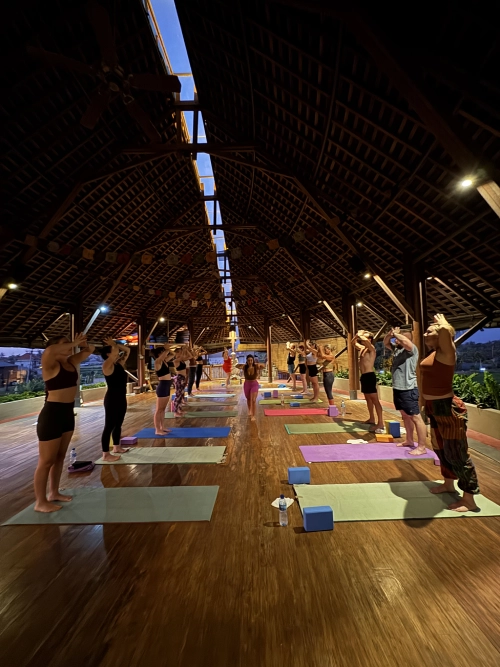
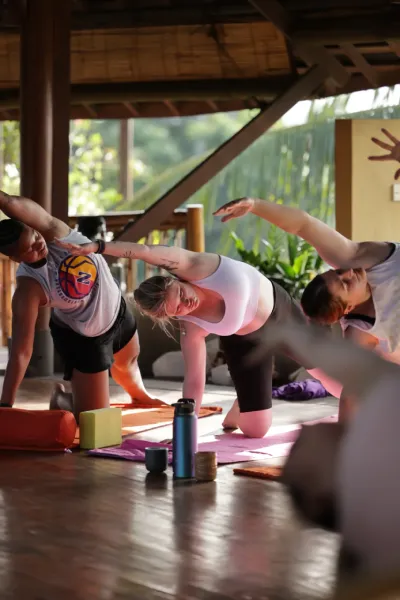
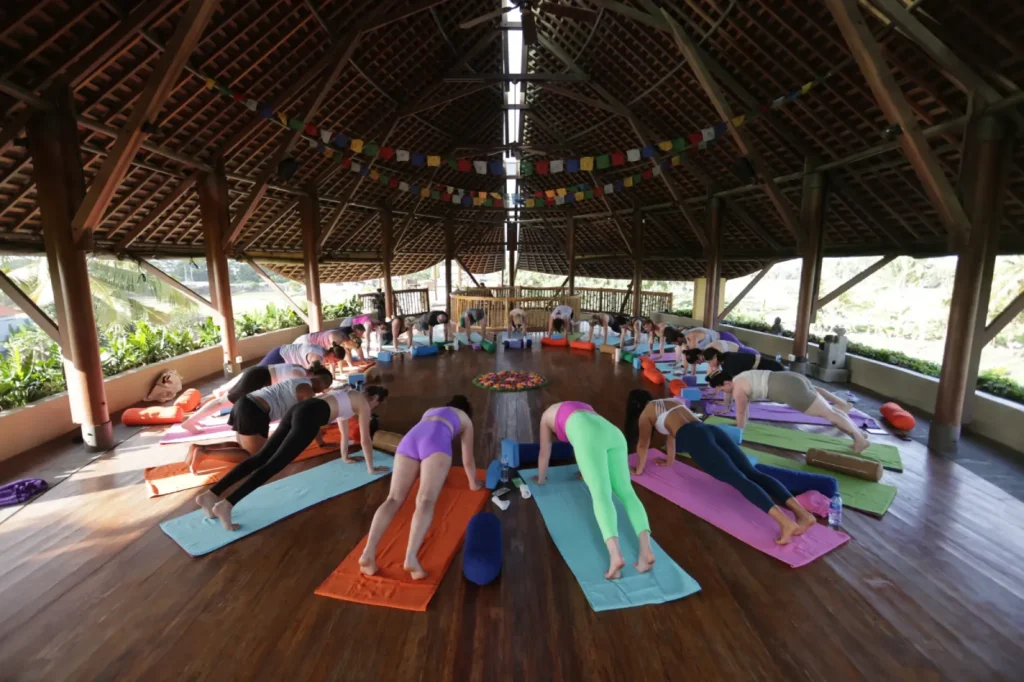
Mornings tend to start early but gently. Think a soft wake-up call, maybe tea before the sun is fully up, then a movement practice, yoga, breathwork, or a slow walk through the rice fields depending on the retreat. Breakfast follows, usually fresh, plant-forward, and locally sourced.
Midday is where most retreats build in open space. Some guests nap. Some read by the pool. Some book a massage or wander down to the beach. Nothing is mandatory here, which surprises people who assumed a retreat would feel like a fitness bootcamp with a wellness theme.
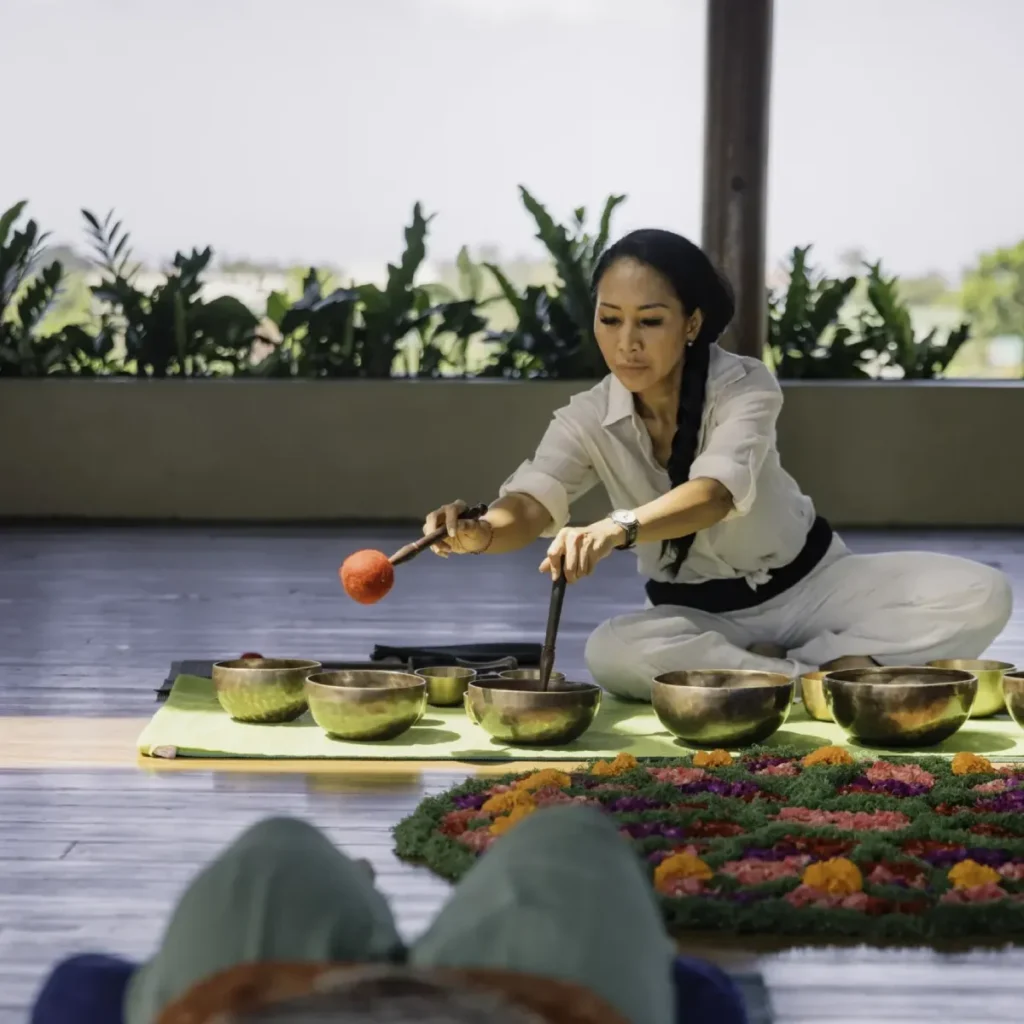
Afternoons often bring a second, gentler session, restorative yoga, a workshop, or a cultural experience like a Balinese offering-making class. Evenings wind down early, sometimes with a group dinner, sometimes with quiet time built in on purpose. Some retreats include an evening ceremony or sound healing session a few times through the week, though this varies depending on the theme and the retreat leader’s focus.
The specific mix depends on the retreat leader and the theme, but the underlying shape rarely changes: movement, food, rest, connection, repeat. By day three or four, most guests stop checking the schedule and start just following the rhythm, which is usually the point where people say the retreat “actually starts” for them.
What the food is actually like
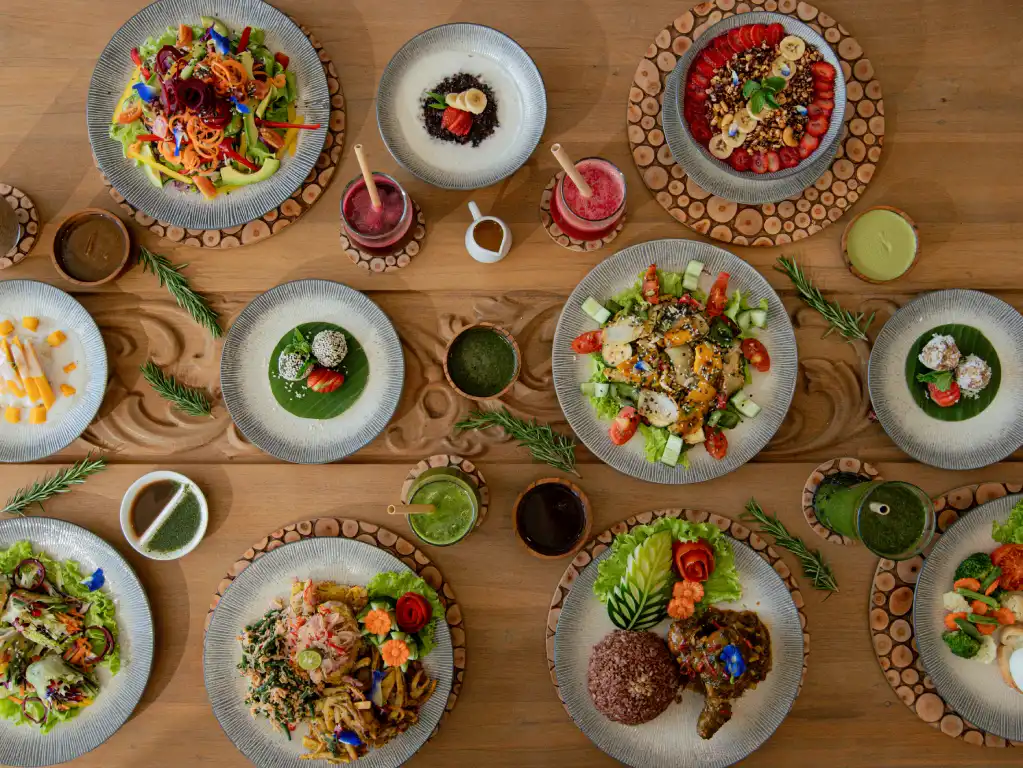
This is usually the first thing people worry about and the first thing that wins them over. At Floating Leaf, meals lean plant-based and locally sourced, built around what’s actually available in Bali rather than imported substitutes. That means a lot of fresh vegetables, tropical fruit, coconut, and slow-cooked dishes designed to be easy on digestion rather than heavy. You can read more about how that philosophy plays out on our dining page.
Portions are generous, not restrictive. A common misconception about wellness retreats is that they mean small plates and hunger. In practice, most retreats built around genuine nourishment do the opposite, they focus on food that’s easy to digest and rich in nutrients, so you leave feeling lighter without ever feeling deprived.
Dietary restrictions are almost always accommodated. Vegetarian, vegan, gluten-free, and other needs are common enough in the retreat world that most kitchens are set up to handle them without much fuss. It’s worth telling your host ahead of time so nothing gets missed, especially if you have a specific allergy rather than a general preference.
What to pack, and what not to worry about
Bring light, breathable clothing, something for cooler evenings since Ubud and the hills can get surprisingly cool after sunset, a reusable water bottle, and an open mind. You don’t need fancy yoga gear or a full wellness wardrobe. A couple of pairs of leggings or loose pants, a swimsuit, sandals, and one slightly nicer outfit for dinner covers most retreats comfortably.
Most retreat centers have laundry service too, so overpacking usually isn’t necessary even for a full week. Sunscreen, a hat, and insect repellent are worth having on hand, along with any personal medications since pharmacies in more rural areas can be limited.
What you don’t need to worry about is showing up “ready.” Nobody expects you to already have a daily meditation practice or advanced flexibility. Retreats are built for people at every stage, including people who’ve never rolled out a yoga mat. Instructors typically offer modifications for every posture and every fitness level, and nobody is watching to judge how deep your forward fold is.
Who this is for, and who it isn’t
A wellness retreat suits people who want structure without rigidity, and rest that actually feels earned rather than idle. It suits people going through a transition, a career change, a breakup, burnout, or simply people who’ve been meaning to slow down for years and finally carved out the time. It’s not about achievement. As we often say, detox and retreat work in general shouldn’t feel like something you push through. It should feel like relief.
That said, it’s not for everyone. If you’re looking for a packed sightseeing itinerary or a party trip, a wellness retreat will feel slow by comparison, on purpose. The pace is the point, and guests who fight that pace instead of settling into it tend to have a harder week than the ones who let go of their usual schedule entirely.
How Floating Leaf structures the first-timer experience
If you’re coming without a group, our Personalized Retreats are built specifically around individual schedules and goals rather than a fixed group itinerary. You work with our team beforehand to shape a week around what you actually need, whether that’s more rest, more movement, or a deeper cultural and healing focus.
For guests who want a signature, ready-built option, the Path to Happy Retreat is designed as an accessible entry point, a full week of yoga, meditation, and wellness without needing to design anything yourself. It’s a good starting place if the idea of building your own retreat from scratch feels like one more decision you don’t want to make right now.
FAQ
Do I need yoga experience to join a Bali wellness retreat?
No. Most retreats, including ours, welcome complete beginners. Instructors typically offer modifications for every level, and a good portion of first-time attendees have never done yoga regularly before arriving.
Is it okay to go alone?
Yes, and it’s actually one of the more common ways people arrive. Group meals and shared activities naturally create connection without forcing it, and many guests say the friendships they made during the week were an unexpected highlight rather than the reason they came.
What’s the daily schedule really like?
Loosely structured mornings and afternoons with built-in rest, rather than a full day of back-to-back activities. Most retreats settle into a predictable rhythm by the second or third day.
How much free time is there?
Usually several hours a day, depending on the retreat. Midday and evenings tend to be the most open, which is when most guests choose spa treatments, journaling, or simply doing nothing at all.
What’s typically included in the price?
Accommodation, meals, and scheduled activities are usually included. Optional add-ons like extra spa treatments or off-site excursions are often available separately, so it’s worth asking exactly what’s bundled in before you book.
Is it normal to feel emotional during a retreat?
Yes, and it’s more common than people expect. Slowing down for the first time in a long time can bring up feelings that daily life usually keeps buried. Most retreat teams are used to holding space for this and won’t treat it as unusual.
Ready to experience it for yourself?
Whether you already have a retreat in mind or you’re still deciding what kind of week you need, our team can help you figure out the right fit. Explore our personalized retreats or reach out directly to start planning.
Source: Global Wellness Institute, Global Wellness Economy Monitor 2025